Stress Management for Peak Performance
A client — a surgical device sales director who trains with us at 6 a.m. before back-to-back calls — hit a wall in July. Her squat had been climbing steadily for ten weeks, then flattened.
AAAI/ISMA strength coaching is a certification from AAAI/ISMA, a long-running certifying organization for fitness instructors and personal trainers. People in Del Mar and Carmel Valley usually search for it when they want a coach whose paperwork specifically covers resistance training rather than general group exercise.
Every coach here names this specialty on their own profile. Open one to read their story, then request a free introduction.
AAAI/ISMA issues a range of fitness certifications, from group exercise and personal training to specialty tracks. Its strength coaching credential is one of those specialty tracks, aimed at instructors who program lifting and resistance work for the general public.
Like most private certifications, it is earned through study material and an exam. It is not a state license, and California does not license personal trainers at all, so any certification is a voluntary signal a coach chose to pursue.
It tells you a coach has studied the fundamentals of load, sets, reps, rest and exercise technique to a level the issuer was willing to sign off on. That is a reasonable floor.
It does not tell you how many people the coach has actually taught to deadlift, how they adjust a plan for a stiff lower back, or whether their style suits you. A certificate is a starting point for the conversation, not the end of it.
A lot of people around Del Mar come to strength training sideways: a surfer who wants sturdier shoulders for paddling, a Carmel Valley parent who wants to keep up with kids in club sports, a Sorrento Valley desk worker whose back complains after long days. Each needs a different loading plan.
A coach with a strength-specific credential should be able to explain why a program is built the way it is, not just hand you exercises. Ask for that explanation; it is the quickest way to see whether the training behind the letters stuck.
Expect the first session or two to be about learning how you move: a squat or sit-to-stand pattern, a hinge, a push, a pull, and something single-legged. From there a coach picks a handful of main lifts and a few accessory movements, then adds load, reps or difficulty in small steps over weeks.
Progress should be visible in a log. If your notes from week one and week eight look the same, the plan is not progressing, whatever the credential says. Ask how your coach records sessions and whether you can see that record.
Strength and performance training uses progressive overload on the major lifts and athletic movements to build force, power and resilience. It serves anyone who wants to be stronger, from a first barbell squat to a competitive athlete preparing for a season.
Lifts are taught and reviewed first, because a clean pattern makes heavier weight safer and more productive.
Weights, sets and reps are laid out across weeks, with built-in lighter weeks, so strength climbs without constant plateaus or burnout.
For athletes, the program is matched to the demands and calendar of the sport: strength in the off-season, power and maintenance as competition nears.
Every session is logged, so you can see what you lifted last month and what the next target is.
A client — a surgical device sales director who trains with us at 6 a.m. before back-to-back calls — hit a wall in July. Her squat had been climbing steadily for ten weeks, then flattened.
A client walks in after a nine-hour day of back-to-back meetings, phone still buzzing in her bag, and tells us she can’t focus enough to train.
A client of ours — a surgeon who trains for the Solana Beach Triathlon every June — came into a Saturday session in June describing what happened on a 2-hour bluff-trail run near Torrey…
No. They are separate organizations with their own study material and exams. Each covers similar foundations with different emphasis, so compare how a coach actually programs rather than ranking the logos.
Check the coach profiles on this page and ask at your introduction. Strength coaching applies to first-timers as much as experienced lifters, but each coach decides who they work with.
Ask how they would progress your first eight weeks, how they decide when to add weight, and what they would change if a lift caused pain. Clear, specific answers matter more than the certificate itself.
If you have a heart condition, recent surgery, an injury, are pregnant, or have been inactive for a long time, get clearance from your physician first and share any limits with your coach.
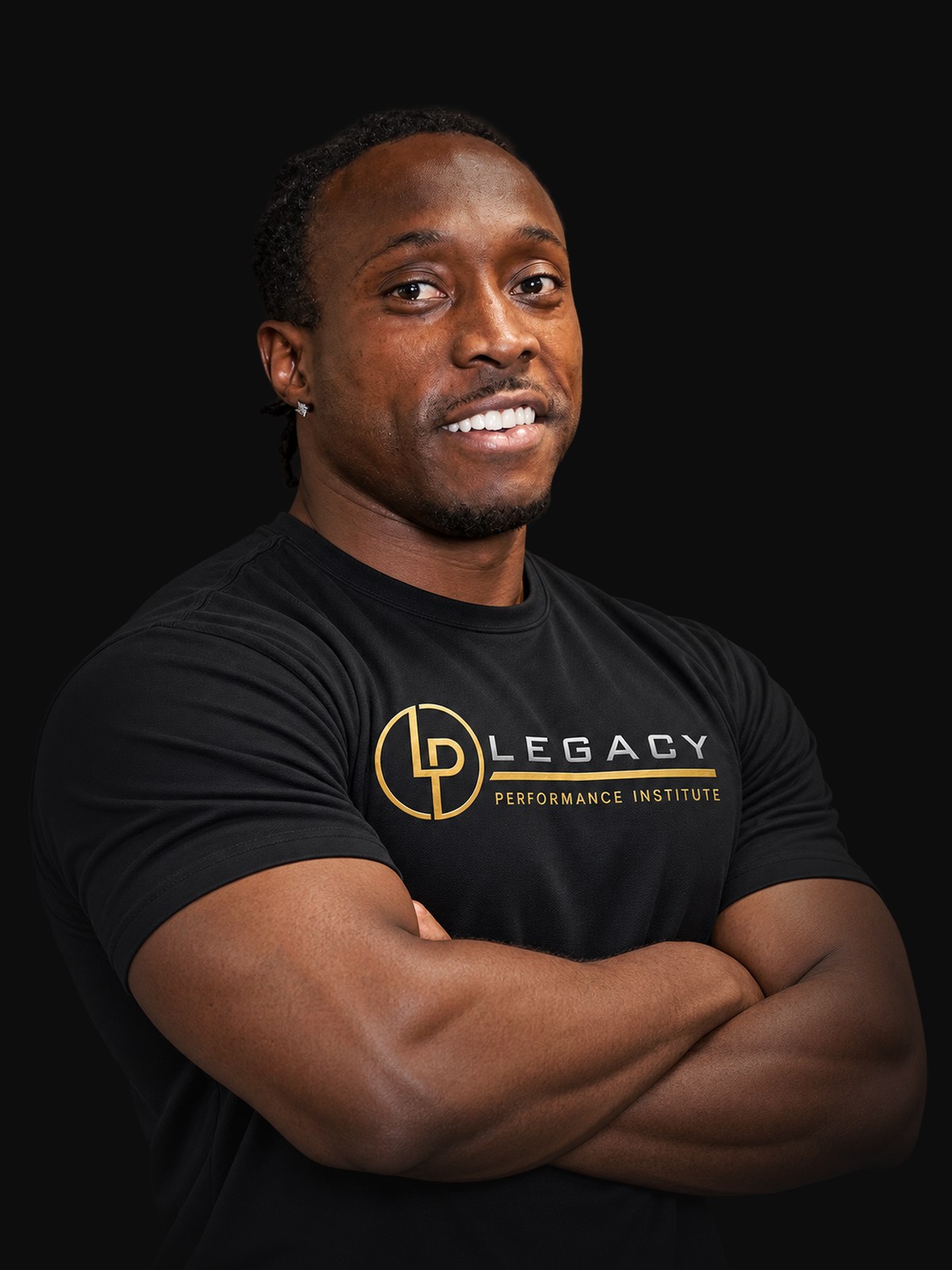
Eric Brown Jr. Each one lists aaai/isma strength coaching on their own Legacy profile. Open any profile to read their background and request a free introduction.
At Legacy Performance Institute Del Mar, 12264 El Camino Real, Suite 60, San Diego, CA 92130. Hours: 5:00 AM – 10:00 PM, seven days · 24/7 for VIP Access members.
Coaching is priced by each coach, typically per session or as a package, and quoted after your free introduction. No membership is required to train with a coach. Coaching is booked directly with the coach you choose.
No. Your coach starts with an assessment and builds the program to your level. Your first consultation and introductory session with a Legacy coach is free, with no obligation.
Yes, when it is coached. A good coach starts with a movement assessment, teaches the patterns with light loads, and progresses only when your technique is solid. Tell your coach about any injuries or medical conditions at your introduction.
This is general fitness information, not medical advice. Check with your physician before starting a new exercise or nutrition program, especially if you have a medical condition, an injury, or are pregnant.
Your first consultation and introductory session with a Legacy coach is free, with no obligation. Tell us about your goals and we will match you with the right coach.