Periodized Nutrition: San Diego’s Best-Kept Secret
A client walked into our San Diego facility in January having tracked the same 1,800-calorie, 150g-protein target for four straight months. Her lifts hadn’t moved in six weeks.
Golf-specific fitness training targets the physical qualities the swing depends on: rotation through the hips and upper back, stability through the lead leg, grip strength and the ability to produce speed without strain. San Diego golfers who play year-round, whether at municipal courses around the city or on weekend trips, look for it to add distance, stay consistent through eighteen holes and keep their back happy.
Every coach here names this specialty on their own profile. Open one to read their story, then request a free introduction.
A golf swing is a fast rotation that has to stay organized. The hips turn, the upper back turns further, and force travels from the ground through the legs and trunk into the club. Limited hip or thoracic rotation often gets made up for at the lower back or elbow, which is where many golfers feel trouble.
Golf fitness tries to restore the range the swing needs, then build the strength and speed to use it.
A coach typically opens with a movement screen: can you rotate your hips and upper back independently, balance on one leg, hinge without rounding, and turn your trunk while your hips stay still. Results shape the plan.
Sessions usually blend mobility for the hips and thoracic spine, single-leg strength, anti-rotation and rotational core work, and some speed work such as medicine ball throws. Grip and forearm strength often get attention too. Programs are usually adjusted around your playing schedule so you are not sore before a round.
It suits golfers of any handicap who want more consistency or speed, players coming back after time away, and older golfers who want to keep playing comfortably. It complements lessons with a golf professional; it does not replace them.
If you have back pain, a joint replacement, a prior shoulder or elbow injury, or osteoporosis, get clearance from your physician first. Rotation under speed is demanding, and a coach should know your history before adding power work.
Coaches retest the opening screen and track strength and power numbers over time. Many golfers also bring their own data, such as clubhead speed from a launch monitor or how their back feels on the back nine, which a coach can fold into the plan.
When choosing a coach, ask what screen they use, how they coordinate with your golf instructor if you have one, and how they would schedule harder sessions around tee times. Ask too how they would handle a flare-up of back or elbow pain mid-season. Clear answers to those questions matter more than a long list of golf drills.
Personal training is one coach, one plan, built around you. It combines assessment, programming, coaching in the room and accountability, so the time you invest goes toward your own goals rather than a generic routine.
Your coach learns your goals, history, schedule and limitations, and screens how you move before writing anything down.
Exercises, loads and session structure are chosen for your body and goal, and they change as you improve.
Your coach teaches technique, adjusts loads in real time and keeps sessions productive, which is the part an app or a video cannot do.
Strength, measurements, consistency and how you feel are tracked so you can see the direction, not just guess at it.
A client walked into our San Diego facility in January having tracked the same 1,800-calorie, 150g-protein target for four straight months. Her lifts hadn’t moved in six weeks.
A client of ours — an anesthesiologist who’s at Scripps La Jolla by 7:30 most mornings — used to train whenever her schedule allowed, which in practice meant she trained maybe six times a…
A woman came into our studio last year after two years of self-directed training at a big-box gym in Mission Valley.
It may, especially if mobility or strength is currently limiting your swing, but results vary and depend on technique too. A coach can explain what to expect after assessing you.
In San Diego the season is effectively year-round, so most coaches plan lighter and heavier weeks around your rounds and events instead of a single off-season.
Usually not. Ask at your free introduction whether the coach wants to see video of your swing to guide the plan.
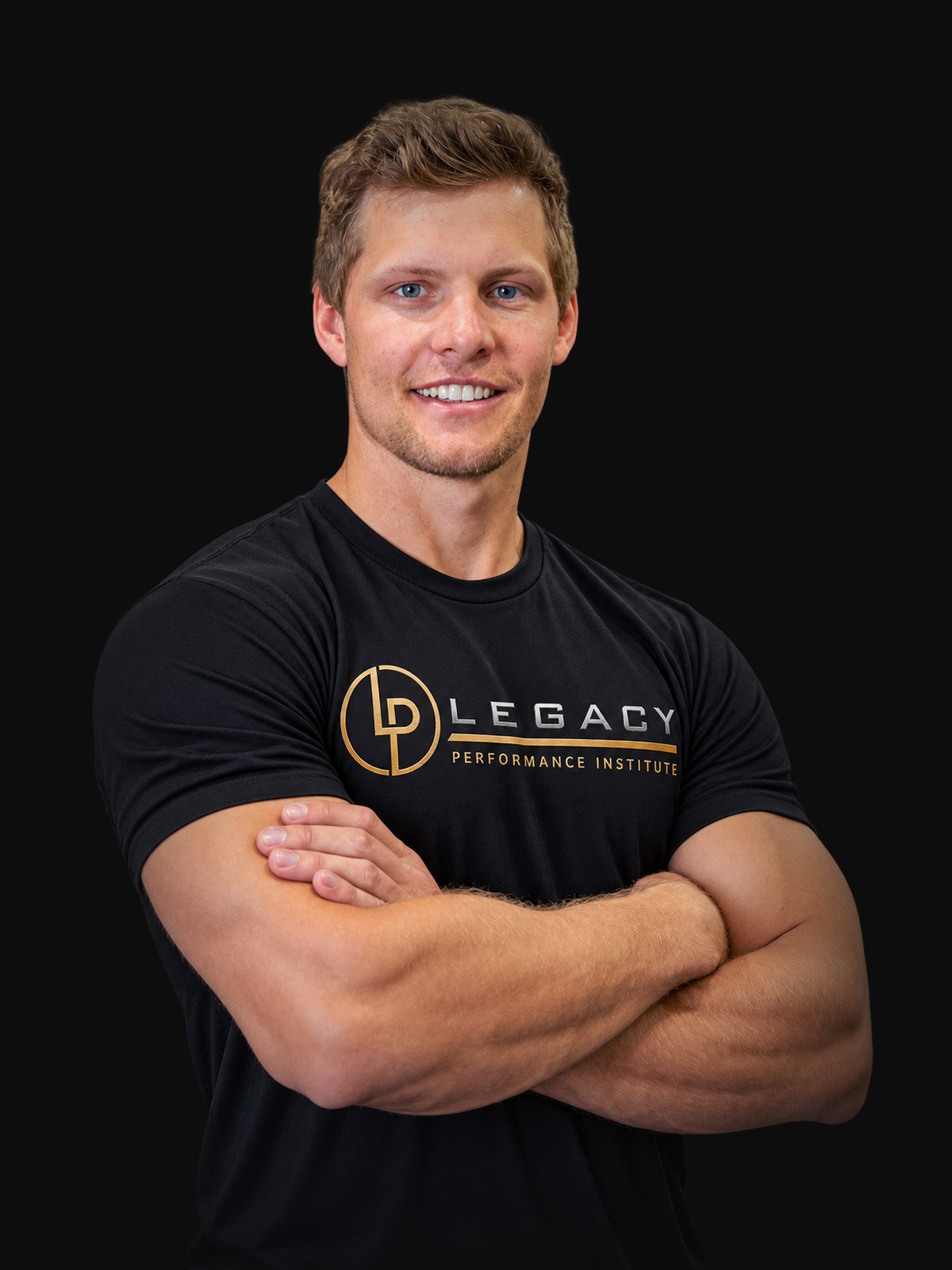
Wyatt Wermager. Each one lists golf specific fitness training on their own Legacy profile. Open any profile to read their background and request a free introduction.
At Legacy Performance Institute San Diego, 4030B Sports Arena Blvd, San Diego, CA 92110. Hours: Mon–Fri 6:00 AM – 9:00 PM · Sat–Sun 8:00 AM – 6:00 PM · 24/7 for VIP Access members.
Coaching is priced by each coach, typically per session or as a package, and quoted after your free introduction. No membership is required to train with a coach. Coaching is booked directly with the coach you choose.
No. Your coach starts with an assessment and builds the program to your level. Your first consultation and introductory session with a Legacy coach is free, with no obligation.
It depends on your goal, schedule and budget. Many clients work with their coach one to three times a week and train on their own in between. Your coach recommends a frequency after your free introduction.
This is general fitness information, not medical advice. Check with your physician before starting a new exercise or nutrition program, especially if you have a medical condition, an injury, or are pregnant.
Your first consultation and introductory session with a Legacy coach is free, with no obligation. Tell us about your goals and we will match you with the right coach.