
Staying Motivated After Reaching Fitness Goals: A 5-Phase Plan for Avoiding Plateaus and Maintaining Progress
A client of ours spent eleven months losing 32 pounds and pulling her deadlift from 95 to 205 pounds.
Functional fitness trains the movements you use outside the gym: squatting, hinging, pushing, pulling, carrying, rotating and balancing. If you live near Torrey Pines and want a coach who builds that kind of strength, Legacy Del Mar serves your area at 12264 El Camino Real, Suite 60, San Diego, CA 92130. Your first consultation and introductory session are free.
The phrase gets used loosely, so here is a plain definition. Functional training builds strength through movement patterns your body uses every day, often using several joints at once, instead of isolating one muscle at a time. A goblet squat, a loaded carry, a step-up, a row and a rotational press are all examples.
The payoff is transfer. A stronger hip hinge makes picking up a heavy box easier. Better single-leg control makes uneven trail footing less risky. Stronger shoulders and a stable trunk make overhead reaching and throwing feel steadier.
Rather than a list of machines, a functional program is organized around patterns. Your coach screens how well you perform each one, then builds strength and control where you need it most.
It suits people whose main goal is to move well and stay capable: weekend hikers and runners, golfers, people with desk jobs who feel stiff, parents who lift children all day, and adults returning to exercise after a gap. It also works as a foundation for athletes who want a more complete base before specializing.
It is not a separate world from other training. Good functional programs still use progressive overload, meaning loads and difficulty rise gradually, and they still respect recovery. The difference is the choice of exercises and the emphasis on quality of movement.
Torrey Pines is known for Torrey Pines State Natural Reserve, its coastal trails, Torrey Pines State Beach and the golf courses on the bluffs. Residents and visitors alike spend a lot of time walking, hiking, running and playing sports on uneven ground. Functional training maps well onto that: single-leg strength, ankle and hip stability, and a strong trunk all help on trails and on the course.
Legacy Del Mar serves Torrey Pines and the neighboring communities of La Jolla, Del Mar Heights and Sorrento Valley, and it is open 5:00 AM to 10:00 PM every day. For a neighborhood overview, see personal training for Torrey Pines.
The first meeting is a conversation and a movement check. Your coach asks about goals, past injuries and what a normal week looks like, then watches you squat, hinge, press and balance. That tells them where to start and what to avoid for now.
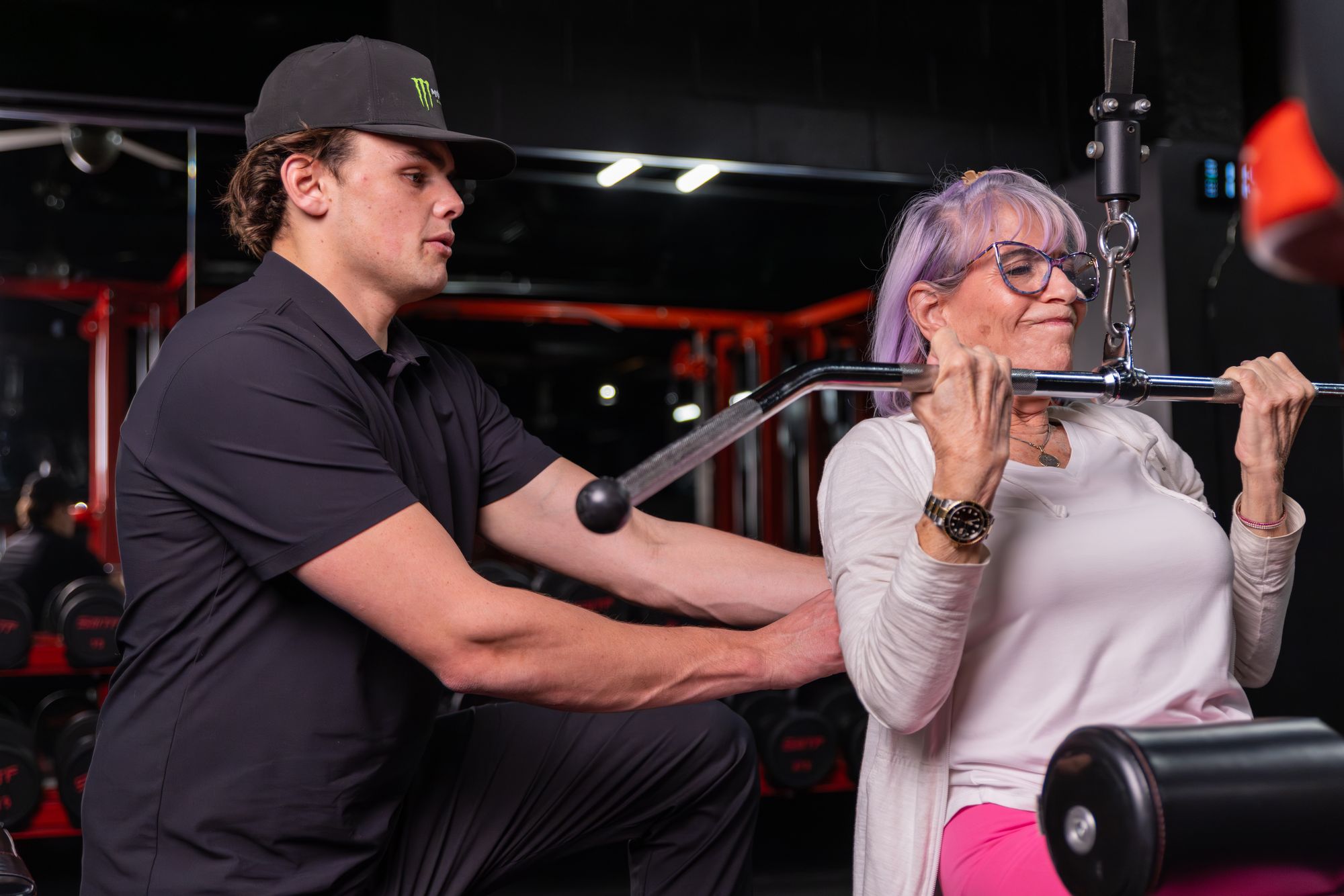
From there you receive a plan that blends strength, mobility and conditioning, with exercises demonstrated and coached in person. Because sessions are one-on-one or small group, form corrections happen as you move, not after the fact.
A short movement screen and a goal conversation.
Strength and control in the patterns you use most.
Loads and complexity increase as your quality improves.
If you have pain, a diagnosed injury or a medical condition, see your physician or a physical therapist first and share their guidance with your coach. Coaches can adapt exercises and choose safer variations, but they do not diagnose or treat injuries. Pain that sharpens or persists is a reason to stop and get it checked, not to push through.
Early gains in functional training are usually about control rather than load. Movements that felt wobbly in week one start to feel steady by week four, and your coach rises in difficulty by adding load, slowing the tempo, shortening rest or moving to a single-leg version.
By the third month, many people notice that stairs, hills and carrying tasks feel easier, though the pace varies with how often you train and how well you recover. Your coach reviews your movement screen at intervals so you can see changes in the same exercises you started with, not just how you feel.
Strength is only one measure. Pain-free range of motion, steadier balance and the ability to keep up with the activities you enjoy matter just as much, and a good program tracks all of them.
No membership is required to train with a coach. Coaches are independent professionals who set their own rates, typically per session or as a package, and your coach quotes you after the free introduction. Browse the coach roster to find those who list functional fitness or functional training, then book a free session with the one whose style appeals to you.
For broader context, the strength training hub and the specialties page show how functional work fits with other coaching styles.
These coaches name this specialty on their own Legacy profile.
A client of ours spent eleven months losing 32 pounds and pulling her deadlift from 95 to 205 pounds.
A client of ours — a partner at a La Jolla law firm, three kids, a 5:45 a.m. flight to LA most Tuesdays — told us he’d stopped trying to find an hour for the gym.
A 42-year-old client of ours — a director at a biotech firm in Torrey Pines — came to us after 14 straight weeks of training five days a week without a single easy week.
They overlap heavily. Functional training emphasizes multi-joint movement patterns that resemble daily activity, while traditional strength training can also isolate individual muscles. A good program usually blends both, and your coach chooses based on your goals.
It can help. Single-leg stability, hip and trunk strength, rotation and balance are all relevant to hiking and golf. A coach can tailor exercises to the demands of your activity, though results depend on consistency and the rest of your training.
No. A coach starts with a movement check and teaches each pattern with light loads before progressing. Beginners and experienced exercisers both start where their current ability is.
It can contribute by building muscle and raising activity, but weight change mainly depends on overall energy balance, nutrition, sleep and consistency. Your coach can discuss food habits within the scope of fitness coaching.
Often yes, with modifications, but get clearance from your physician or physical therapist first. Share their instructions with your coach, who will choose exercises that respect your limits. Coaches do not diagnose or treat injuries.
No membership is required. Each coach sets their own rates, typically per session or as a package, and quotes you after your free introduction.
12264 El Camino Real, Suite 60, San Diego, CA 92130, in El Camino Tower. Hours are 5:00 AM to 10:00 PM seven days a week, and VIP Access Pass members get a personal key fob for 24/7 access. Call (760) 579-9286.
Most people feel steadier and more coordinated within several weeks, with strength and endurance changes building over a few months. The pace depends on how often you train, your starting point and how well you recover.
This is general fitness information, not medical advice. Check with your physician before starting a new exercise or nutrition program, especially if you have a medical condition, an injury, or are pregnant.
Your first consultation and introductory session with a Legacy coach is free, with no obligation. Tell us about your goals and we will match you with the right coach.