Stress Management for Peak Performance
A client — a surgical device sales director who trains with us at 6 a.m. before back-to-back calls — hit a wall in July. Her squat had been climbing steadily for ten weeks, then flattened.
Certified High Performance Coach is a coaching credential centered on mindset, habits, energy and productivity rather than exercise science. People in Del Mar look for it when their training stalls for reasons that have more to do with focus, stress and follow-through than with sets and reps.
Every coach here names this specialty on their own profile. Open one to read their story, then request a free introduction.
The Certified High Performance Coach title comes from a private coaching education program focused on personal performance: clarity on goals, energy management, productivity, and the routines that support them. It is a life and performance coaching credential, not a fitness certification, and it is not accredited the way exercise certifications like NCCA-accredited personal trainer exams are.
When a fitness coach holds it, it usually sits alongside a training certification and shapes how they coach the person rather than how they program the exercise.
It tells you a coach has studied a structured approach to goal setting, accountability and habit change, and has likely practiced it with clients. If you know what to do in the gym but keep not doing it, that skill set is relevant.
It does not tell you anything about a coach's knowledge of strength training, injury management or conditioning. It is also not counseling or therapy. Anxiety, depression or burnout that affects daily life belongs with a licensed mental health professional, and a good coach will say so.
Many people training near Carmel Valley are juggling demanding jobs in Sorrento Valley or University City, long commutes, and family calendars that fill every weekend. Training often loses to everything else, not because people lack information but because the week has no room left.
A coach with this background tends to spend time on the structure around the workout: when you train, what gets in the way, how you recover from a missed week. For some people, that conversation is what finally makes three sessions a week stick.
Look for concrete changes, not just motivation. Are you hitting your planned sessions more consistently? Sleeping a bit more? Arriving less frazzled? A coach using this approach should help you define a few trackable behaviors and review them with you, rather than leaving progress as a feeling.
Strength and performance training uses progressive overload on the major lifts and athletic movements to build force, power and resilience. It serves anyone who wants to be stronger, from a first barbell squat to a competitive athlete preparing for a season.
Lifts are taught and reviewed first, because a clean pattern makes heavier weight safer and more productive.
Weights, sets and reps are laid out across weeks, with built-in lighter weeks, so strength climbs without constant plateaus or burnout.
For athletes, the program is matched to the demands and calendar of the sport: strength in the off-season, power and maintenance as competition nears.
Every session is logged, so you can see what you lifted last month and what the next target is.
A client — a surgical device sales director who trains with us at 6 a.m. before back-to-back calls — hit a wall in July. Her squat had been climbing steadily for ten weeks, then flattened.
A client walks in after a nine-hour day of back-to-back meetings, phone still buzzing in her bag, and tells us she can’t focus enough to train.
A client of ours — a surgeon who trains for the Solana Beach Triathlon every June — came into a Saturday session in June describing what happened on a 2-hour bluff-trail run near Torrey…
No. The credential covers mindset and habits. If you want exercise coaching too, ask whether the coach also holds a fitness certification and how they combine the two.
That depends on the coach. Some fold short check-ins into regular training sessions; others set aside separate time. Ask at your introduction how they structure it.
They can help with routines and focus, but they are not clinicians. For mental health concerns, talk to a licensed professional or your physician.
A useful test: if you have had a reasonable plan before and stopped following it within a few weeks, the obstacle is probably habits and scheduling rather than exercise selection. If you have never had a structured plan, start there. Many people around Del Mar need a little of both, and a coach who holds a training certification alongside this one can blend them in the same weekly sessions.
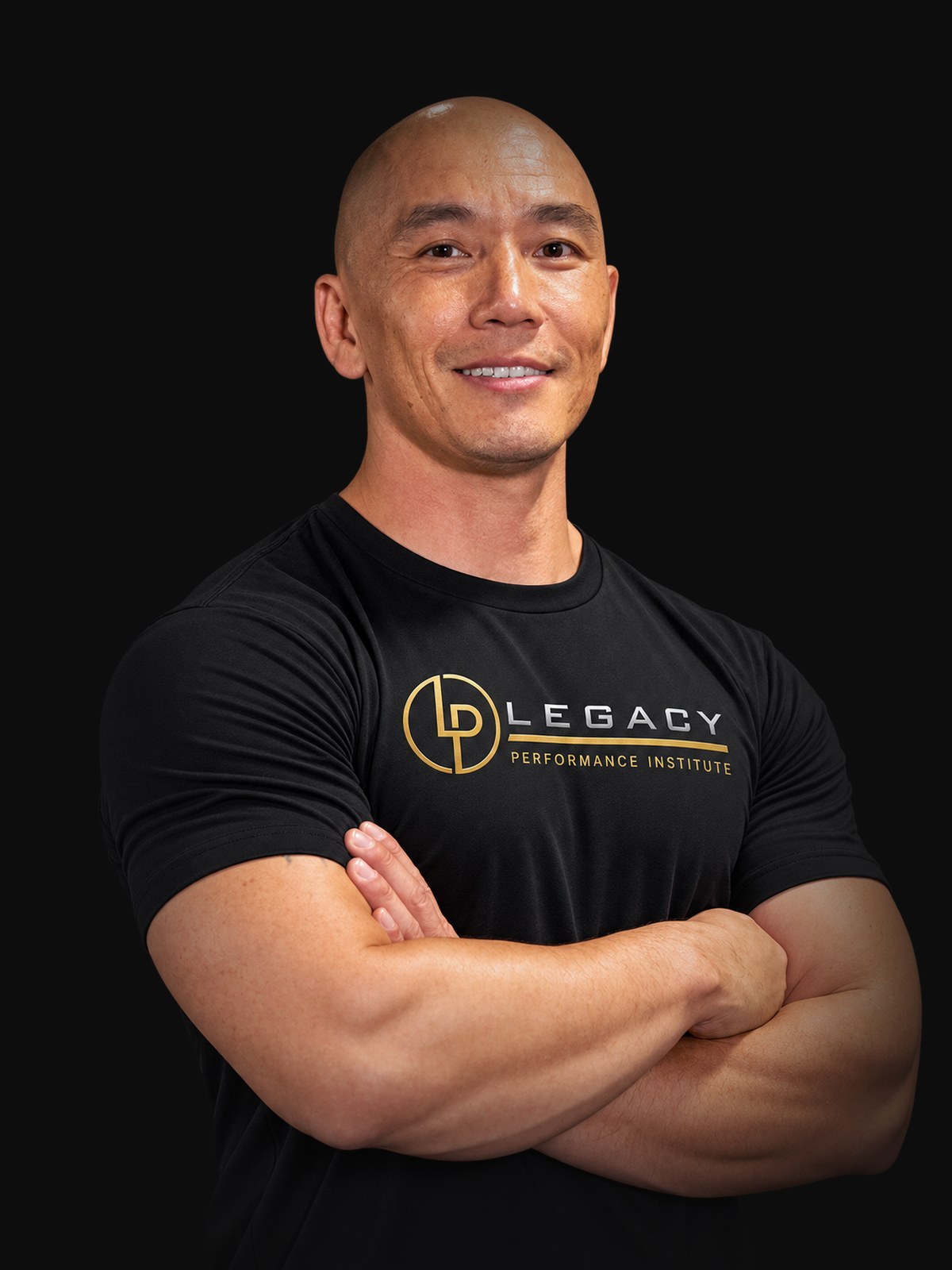
Tim Chau. Each one lists certified high performance coach on their own Legacy profile. Open any profile to read their background and request a free introduction.
At Legacy Performance Institute Del Mar, 12264 El Camino Real, Suite 60, San Diego, CA 92130. Hours: 5:00 AM – 10:00 PM, seven days · 24/7 for VIP Access members.
Coaching is priced by each coach, typically per session or as a package, and quoted after your free introduction. No membership is required to train with a coach. Coaching is booked directly with the coach you choose.
No. Your coach starts with an assessment and builds the program to your level. Your first consultation and introductory session with a Legacy coach is free, with no obligation.
Yes, when it is coached. A good coach starts with a movement assessment, teaches the patterns with light loads, and progresses only when your technique is solid. Tell your coach about any injuries or medical conditions at your introduction.
This is general fitness information, not medical advice. Check with your physician before starting a new exercise or nutrition program, especially if you have a medical condition, an injury, or are pregnant.
Your first consultation and introductory session with a Legacy coach is free, with no obligation. Tell us about your goals and we will match you with the right coach.