
Personal Training for Aging Seniors in San Diego
Barbara, 71, came to us after a fall in her Bird Rock kitchen left her with a wrist fracture and a new fear of stairs.
Perimenopause and menopause training is exercise planned around the changes many women notice in their forties and fifties, such as shifts in energy, sleep, body composition and recovery. Women in Point Loma and across San Diego look for it when their usual routine stops feeling right. Two coaches at Legacy San Diego list this specialty.
Every coach here names this specialty on their own profile. Open one to read their story, then request a free introduction.
Symptoms during this stage vary widely and some overlap with other medical issues. Before changing your training, talk with your physician or gynecologist about your health, any hormone therapy, bone density, blood pressure and anything else that might affect exercise.
A coach does not diagnose, treat symptoms or advise on hormones. Their role is to plan training that fits the guidance you receive.
General guidance for this life stage commonly includes resistance training to help maintain muscle and bone, some impact or jumping work when appropriate, balance practice, and cardiovascular exercise. Sessions may place more emphasis on recovery, warm-ups and flexibility in planning than earlier in life.
A coach should adjust day to day. On a night after poor sleep, a lighter session may be smarter than pushing through. The coaches here who list this area focus mainly on corrective exercise and on strength and performance.
Many women also find that recovery takes longer than it used to. Planning lighter weeks into the program, rather than waiting to burn out, can help keep training consistent.
It suits women who notice changes in recovery or strength, want to protect bone and muscle as they age, or feel lost about how to train now. It also suits women already lifting who want a program that accounts for this stage rather than ignoring it.
If you have osteoporosis, pelvic floor symptoms, heart concerns or joint problems, get physician clearance and, where relevant, input from a physical therapist.
Some prefer to work with a female coach for this stage; others do not mind. Ask the coaches who list this specialty about their experience and approach, and choose the one you feel comfortable talking to.
Useful markers include strength on key lifts, balance tests, how you feel after sessions, and consistency over months. Some women track sleep or energy alongside training to see patterns they can share with their doctor.
Active aging training keeps strength, balance, mobility and independence high as the years go on. It uses progressive resistance work, balance practice and joint-friendly conditioning, because muscle and movement skill respond to training at every age.
Your coach asks about medical history, medications and limitations, and works within any guidance from your physician.
Sit-to-stand, carrying, pushing, pulling and getting up from the floor are trained directly, because they decide how independent you stay.
Short, specific work on balance, hips, ankles and spine keeps movement confident and reduces fall risk over time.
Volume and intensity progress gradually, with more rest where it helps, so you finish feeling better rather than depleted.
Barbara, 71, came to us after a fall in her Bird Rock kitchen left her with a wrist fracture and a new fear of stairs.
Mark is 43, works downtown near Balboa Park, and used to squat 275 for reps in his late twenties.
A client who runs a mid-sized engineering firm out of downtown San Diego came to us at 34 having just missed a lift he’d hit easily two years earlier.
Exercise is not a medical treatment. Some research suggests regular activity may support sleep, mood and overall health during this stage, but talk with your doctor about symptoms.
For many women, yes, when progressed gradually. Get physician clearance first, especially with known bone or heart conditions.
Ask how they adjust sessions for sleep and energy changes, how they progress load safely, and how they work within guidance from your physician.
It depends on your health, schedule and recovery. Many women aim for a mix of strength and cardio across the week. Your physician and coach can help you set a realistic number.
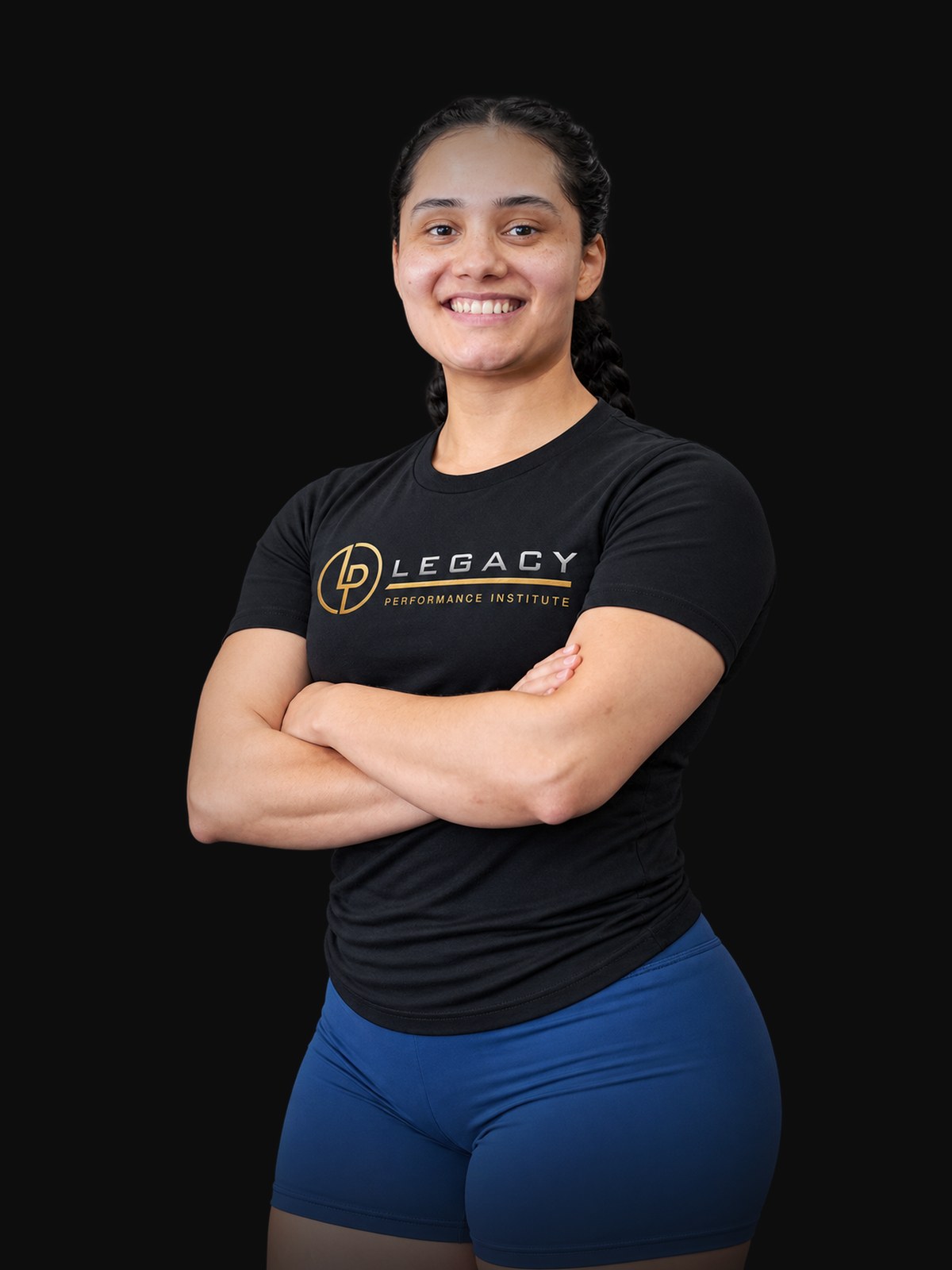
Apryl Ortega, Camryn Elyse Wemmer. Each one lists perimenopause and menopause training on their own Legacy profile. Open any profile to read their background and request a free introduction.
At Legacy Performance Institute San Diego, 4030B Sports Arena Blvd, San Diego, CA 92110. Hours: Mon–Fri 6:00 AM – 9:00 PM · Sat–Sun 8:00 AM – 6:00 PM · 24/7 for VIP Access members.
Coaching is priced by each coach, typically per session or as a package, and quoted after your free introduction. No membership is required to train with a coach. Coaching is booked directly with the coach you choose.
No. Your coach starts with an assessment and builds the program to your level. Your first consultation and introductory session with a Legacy coach is free, with no obligation.
No. Muscle and strength respond to progressive training at any age. Starting with a coach, light loads and a medical clearance if you have conditions, most adults build strength safely and see everyday tasks get easier.
This is general fitness information, not medical advice. Check with your physician before starting a new exercise or nutrition program, especially if you have a medical condition, an injury, or are pregnant.
Your first consultation and introductory session with a Legacy coach is free, with no obligation. Tell us about your goals and we will match you with the right coach.