Grip Strength as a Longevity Marker: What the Research Shows and How to Train It
A client came in for his intake assessment last month, mid-40s, runs a logistics company, hadn’t had a real strength test since a company physical a decade earlier.
Health span is the number of years you live in good health and with physical independence, as opposed to life span, the total years lived. Longevity-focused training aims to protect that capacity: strength, muscle, aerobic fitness, balance and bone health. It attracts people in Del Mar and Rancho Santa Fe from their forties onward who want to still be hiking, traveling and lifting grandchildren decades from now. 1 coach at Legacy Del Mar lists this.
Every coach here names this specialty on their own profile. Open one to read their story, then request a free introduction.
Muscle mass and strength tend to decline with age, and research broadly links higher strength and aerobic fitness with better health outcomes later in life. A longevity program usually rests on four pillars. Strength work two or three days a week, with real loads, to maintain muscle and support bone. Aerobic base work at a conversational pace, plus occasional harder intervals. Balance and agility drills to reduce fall risk. And mobility to keep joints moving through usable ranges.
Power, the ability to produce force quickly, often gets attention too, since it may decline faster than strength. Step-ups with intent, medicine ball throws and controlled jumps can address it when appropriate.
It suits people planning for the long run, whether they are fit now and want to stay that way or are starting after years of inactivity. It also fits those watching parents age and wanting a different path.
If you have heart disease, diabetes, osteoporosis, joint replacements or are on medications that affect heart rate or balance, get clearance from your physician first and ask what intensity limits they recommend.
Useful tests tend to be simple and repeatable: grip strength, a timed sit-to-stand, single-leg balance time, a loaded carry, a walk or step test for aerobic fitness, and the ability to get up from the floor without help. Some clients also share results from their physician, such as blood pressure or bone density, so the coach can understand the context. A slow, steady upward trend over a year means more than any single session.
Ask how the coach balances strength, cardio and balance across a week. Ask how they progress loading for someone your age without being either reckless or overly cautious. Be skeptical of anyone promising to reverse aging or selling protocols as cures. Consistency over years is the real work, so pick someone you would actually enjoy seeing every week at a time that fits, and confirm their availability within Legacy Del Mar's 5:00 AM to 10:00 PM daily hours.
Active aging training keeps strength, balance, mobility and independence high as the years go on. It uses progressive resistance work, balance practice and joint-friendly conditioning, because muscle and movement skill respond to training at every age.
Your coach asks about medical history, medications and limitations, and works within any guidance from your physician.
Sit-to-stand, carrying, pushing, pulling and getting up from the floor are trained directly, because they decide how independent you stay.
Short, specific work on balance, hips, ankles and spine keeps movement confident and reduces fall risk over time.
Volume and intensity progress gradually, with more rest where it helps, so you finish feeling better rather than depleted.
A client came in for his intake assessment last month, mid-40s, runs a logistics company, hadn’t had a real strength test since a company physical a decade earlier.
A training session is one of the few remaining hours that can be genuinely uninterrupted.
North County clients rarely lift in a vacuum. They surf at Cardiff, run the Torrey Pines State Reserve trails, ride the coast, or chase kids around the Del Mar Fairgrounds on weekends.
Research broadly suggests older adults can still gain strength with appropriate training. Start with physician clearance and a gradual plan.
Loads should be challenging for you, which does not mean maximal. Your coach will build up gradually as technique and confidence improve.
Walking is valuable, but most longevity-focused programs add strength and balance work, since walking alone does little to maintain muscle.
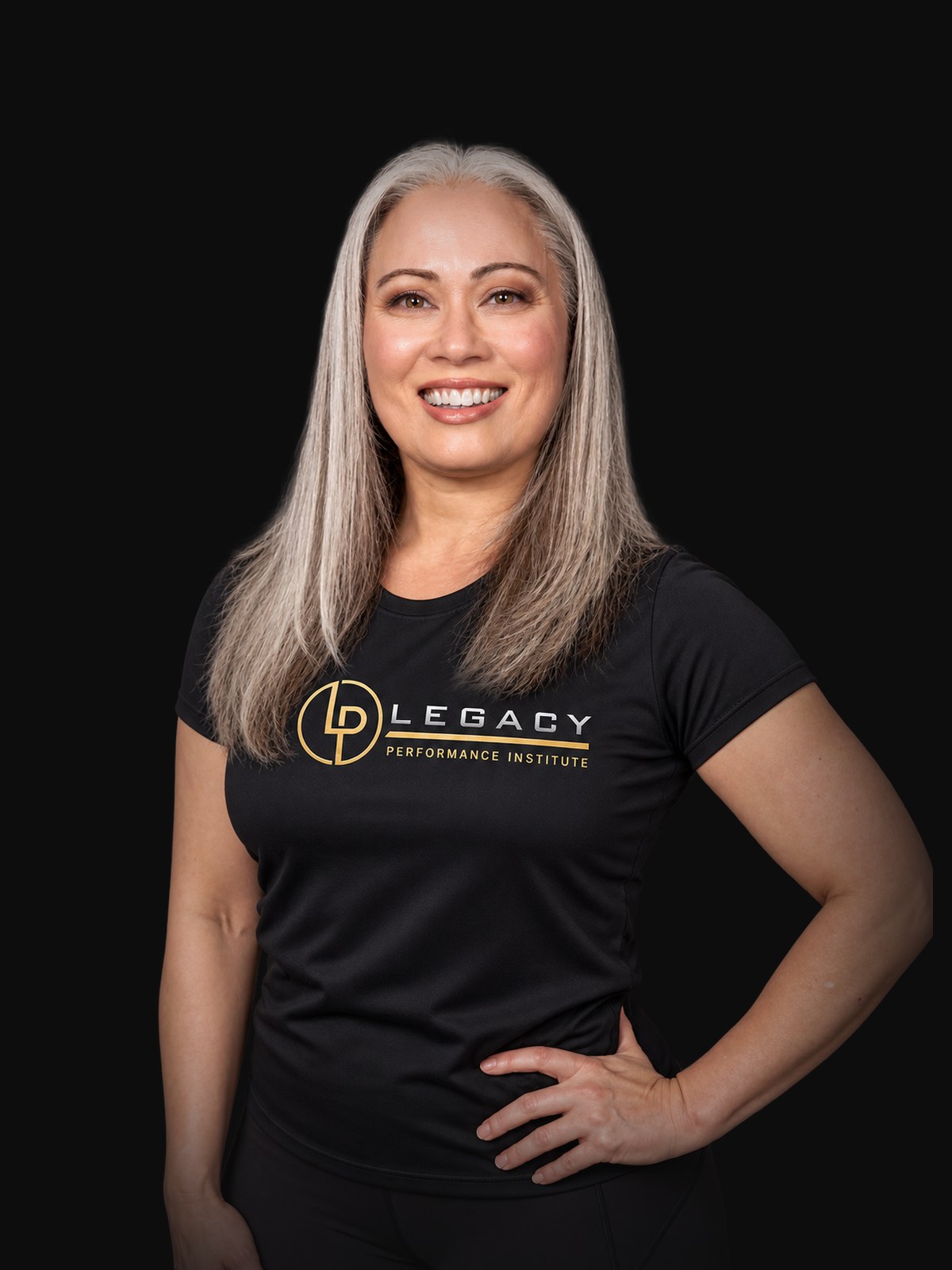
Emiko Jaffe. Each one lists health span & longevity training on their own Legacy profile. Open any profile to read their background and request a free introduction.
At Legacy Performance Institute Del Mar, 12264 El Camino Real, Suite 60, San Diego, CA 92130. Hours: 5:00 AM – 10:00 PM, seven days · 24/7 for VIP Access members.
Coaching is priced by each coach, typically per session or as a package, and quoted after your free introduction. No membership is required to train with a coach. Coaching is booked directly with the coach you choose.
No. Your coach starts with an assessment and builds the program to your level. Your first consultation and introductory session with a Legacy coach is free, with no obligation.
No. Muscle and strength respond to progressive training at any age. Starting with a coach, light loads and a medical clearance if you have conditions, most adults build strength safely and see everyday tasks get easier.
This is general fitness information, not medical advice. Check with your physician before starting a new exercise or nutrition program, especially if you have a medical condition, an injury, or are pregnant.
Your first consultation and introductory session with a Legacy coach is free, with no obligation. Tell us about your goals and we will match you with the right coach.