Staying Motivated After Reaching Fitness Goals: A 5-Phase Plan for Avoiding Plateaus and Maintaining Progress
A client of ours spent eleven months losing 32 pounds and pulling her deadlift from 95 to 205 pounds.
Midlife fitness is training designed for people roughly in their 40s to 60s, when recovery, hormones, joints and schedules start to change the rules. One coach at Legacy Del Mar lists midlife fitness, with a women's fitness focus, so perimenopause and menopause are likely part of the conversation, though the principles apply to anyone at this stage.
Every coach here names this specialty on their own profile. Open one to read their story, then request a free introduction.
Muscle mass and bone density tend to decline with age unless they are trained, and the decline may accelerate for women around menopause. Recovery from hard sessions can take longer. Sleep may become less reliable, which affects energy and appetite. Many people also carry older injuries and have less free time. None of this means training has to be gentle. It means it has to be deliberate.
Strength training is usually the backbone, because keeping muscle and loading bones are among the most useful things exercise can do at this stage. Coaches often pair it with balance and mobility work, modest doses of higher-effort intervals, and enough recovery days to keep joints comfortable. Protein intake often comes up. A coach should adjust volume to how you actually recover, not just follow a template.
Get physician clearance before starting if you have heart disease risk factors, osteoporosis or osteopenia, joint replacements, or take medication that affects heart rate or blood pressure. Menopause symptoms and hormone therapy are medical topics; a coach can adjust training around how you feel but should not advise on treatment.
Useful markers include strength on a few key lifts, a balance test such as single-leg stance time, how stairs and grocery bags feel, waist measurement, and notes on sleep and energy. Some people also track bone density through their physician over longer periods.
Midlife often brings the busiest calendar: careers at their peak, teenagers needing rides, parents who need help. A program that demands six days a week usually collapses within a month. Two or three focused sessions a week plus daily walking is a common structure and is often enough to make real progress. For people in Carmel Valley, Del Mar Heights or Rancho Santa Fe, sessions before the school run are a frequent fit, since Legacy Del Mar opens at 5:00 AM.
Active aging training keeps strength, balance, mobility and independence high as the years go on. It uses progressive resistance work, balance practice and joint-friendly conditioning, because muscle and movement skill respond to training at every age.
Your coach asks about medical history, medications and limitations, and works within any guidance from your physician.
Sit-to-stand, carrying, pushing, pulling and getting up from the floor are trained directly, because they decide how independent you stay.
Short, specific work on balance, hips, ankles and spine keeps movement confident and reduces fall risk over time.
Volume and intensity progress gradually, with more rest where it helps, so you finish feeling better rather than depleted.
A client of ours spent eleven months losing 32 pounds and pulling her deadlift from 95 to 205 pounds.
A client of ours — a partner at a La Jolla law firm, three kids, a 5:45 a.m. flight to LA most Tuesdays — told us he’d stopped trying to find an hour for the gym.
A 42-year-old client of ours — a director at a biotech firm in Torrey Pines — came to us after 14 straight weeks of training five days a week without a single easy week.
Many people start in their 50s, 60s and beyond. Begin lighter, progress steadily and get physician clearance if you have health conditions.
Building significant muscle takes a long time and specific effort. In midlife, strength training mainly helps maintain muscle and everyday function.
A coach can adapt a session to how you feel that day. Symptoms and treatment are for your physician.
Legacy Del Mar is open 5:00 AM to 10:00 PM daily at 12264 El Camino Real in Carmel Valley. The coach books sessions directly with you after a free introduction.
It can be, in moderate doses and after physician clearance if you have heart risk factors. Coaches typically introduce intervals gradually and watch how you recover before adding more.
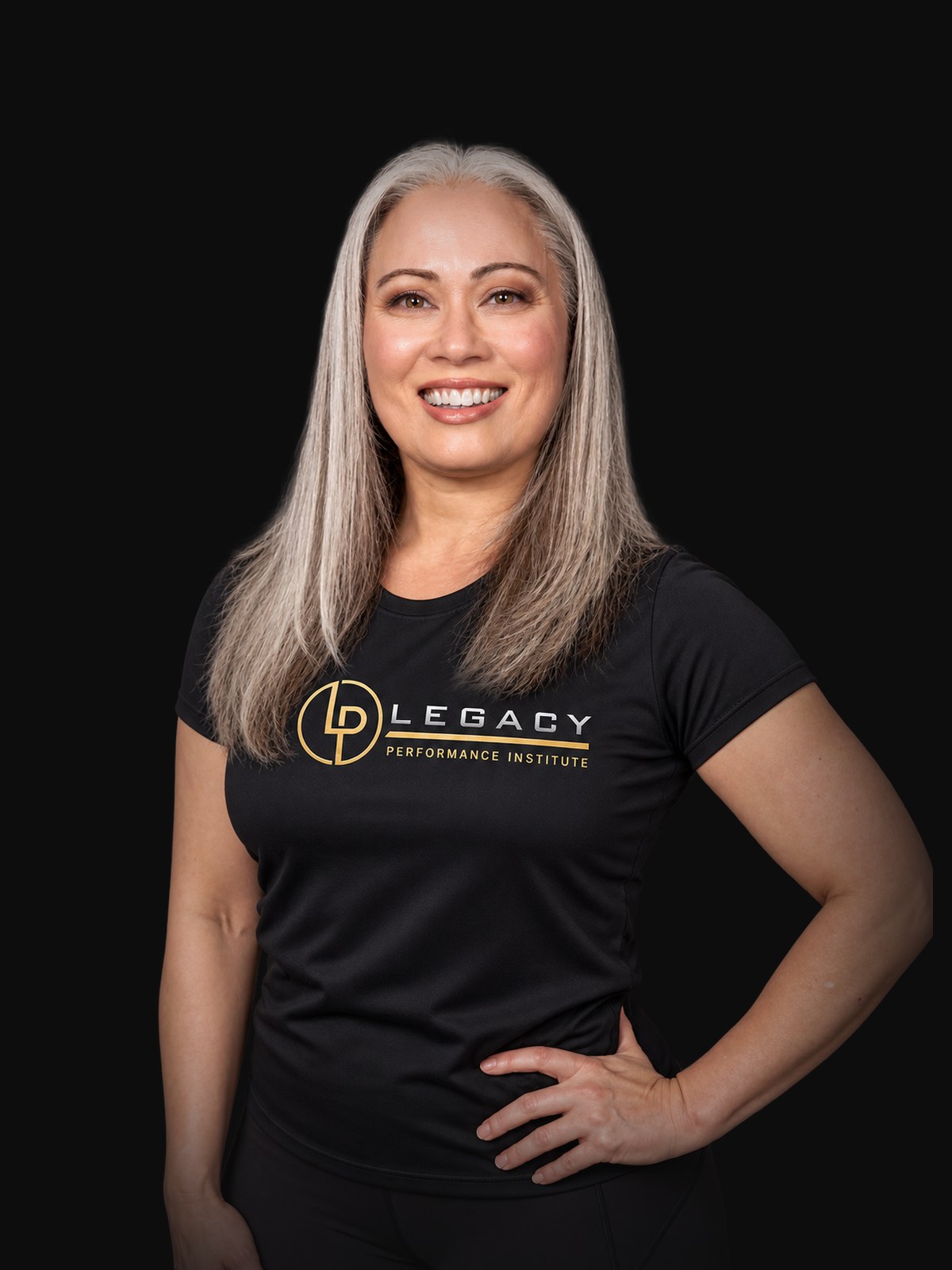
Emiko Jaffe. Each one lists midlife fitness on their own Legacy profile. Open any profile to read their background and request a free introduction.
At Legacy Performance Institute Del Mar, 12264 El Camino Real, Suite 60, San Diego, CA 92130. Hours: 5:00 AM – 10:00 PM, seven days · 24/7 for VIP Access members.
Coaching is priced by each coach, typically per session or as a package, and quoted after your free introduction. No membership is required to train with a coach. Coaching is booked directly with the coach you choose.
No. Your coach starts with an assessment and builds the program to your level. Your first consultation and introductory session with a Legacy coach is free, with no obligation.
No. Muscle and strength respond to progressive training at any age. Starting with a coach, light loads and a medical clearance if you have conditions, most adults build strength safely and see everyday tasks get easier.
This is general fitness information, not medical advice. Check with your physician before starting a new exercise or nutrition program, especially if you have a medical condition, an injury, or are pregnant.
Your first consultation and introductory session with a Legacy coach is free, with no obligation. Tell us about your goals and we will match you with the right coach.