Recovering From Burnout: A 7-Step Exercise Guide
Marcus hadn’t been to the gym in fourteen weeks when he called us. Not because he got hurt. Not because he moved.
ACSM Exercise Physiologist refers to the ACSM Certified Exercise Physiologist credential from the American College of Sports Medicine. People look for it when they want a coach whose training leans on formal exercise science, often because they are managing a health history alongside their fitness goals.
Every coach here names this specialty on their own profile. Open one to read their story, then request a free introduction.
The American College of Sports Medicine is a professional organization in sports medicine and exercise science, known for publishing widely used exercise guidelines. It offers several certifications; the Certified Exercise Physiologist sits above an entry-level trainer credential.
Candidates generally need a bachelor's degree in exercise science or a related field to sit for the exam. The credential covers fitness assessment, exercise prescription and working with adults who are healthy or have medically controlled conditions.
It tells you a coach has a degree-level foundation and passed an exam focused on testing, prescription and safety. For someone who wants their program built from measurements rather than guesswork, that background helps.
It does not make a coach a clinician. An exercise physiologist does not diagnose, treat or replace your physician or physical therapist. It also does not say anything about a coach's experience with your specific sport, or whether you will enjoy working with them.
Around Del Mar, Carmel Valley and Rancho Santa Fe, this credential tends to come up for people in their fifties and beyond who want to stay active on the trails and courts, people returning to exercise after a long break, and anyone whose physician has suggested more structured exercise.
If that is you, bring your physician's guidance to the introduction. A good coach will build within those limits and tell you when a question belongs back with your doctor.
Expect more measurement than average. A coach with exercise physiology training may start with resting heart rate, blood pressure readings you bring from your doctor, a walking or cycling test, simple strength tests and a movement screen. Those numbers set starting intensities and give you something concrete to re-test after eight or twelve weeks.
Sessions themselves can look ordinary: warm-up, strength work, some conditioning. The difference is usually in how intensity is chosen and adjusted, often using heart rate or perceived effort, so the work stays productive without overshooting what your body is ready for.
Personal training is one coach, one plan, built around you. It combines assessment, programming, coaching in the room and accountability, so the time you invest goes toward your own goals rather than a generic routine.
Your coach learns your goals, history, schedule and limitations, and screens how you move before writing anything down.
Exercises, loads and session structure are chosen for your body and goal, and they change as you improve.
Your coach teaches technique, adjusts loads in real time and keeps sessions productive, which is the part an app or a video cannot do.
Strength, measurements, consistency and how you feel are tracked so you can see the direction, not just guess at it.
Marcus hadn’t been to the gym in fourteen weeks when he called us. Not because he got hurt. Not because he moved.
A client sat across from me a few months ago and said something I’ve heard in some version at least a hundred times: “I know exactly what to do.
A client came in for her assessment last month with a resting hs-CRP of 4.2 mg/L, chronic knee stiffness she’d been managing with ibuprofen for two years, and a training history of six…
No. ACSM offers a separate clinical credential for work with people who have more complex conditions. Ask the coach exactly which ACSM credential they hold.
Assessment is central to the credential, but how each coach uses it varies. Ask at your introduction what they measure at the start and how often they re-test.
If you have heart, lung, metabolic or joint conditions, are pregnant, or are recovering from surgery, get clearance from your physician before starting and share any restrictions with your coach.
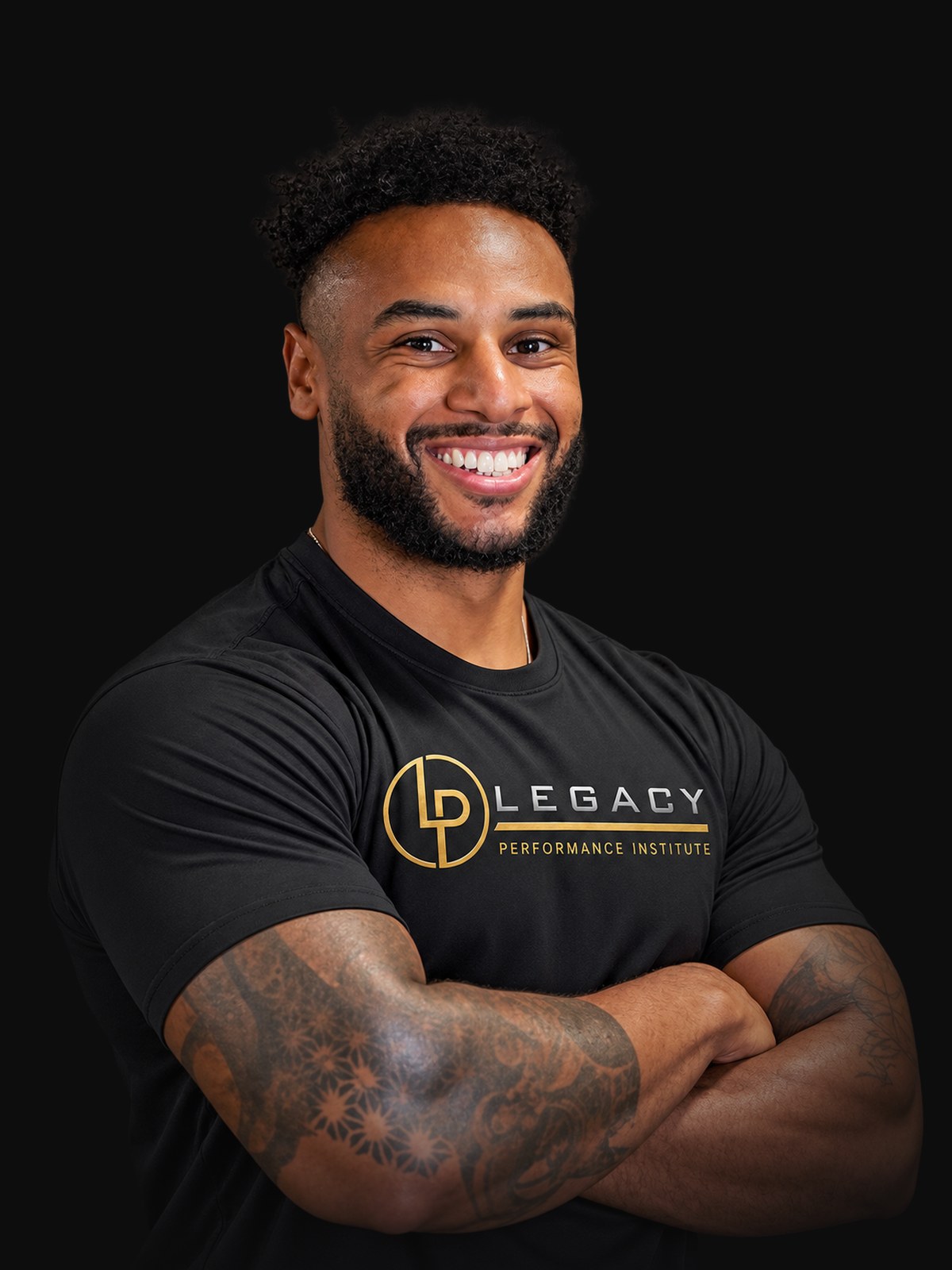
Randy Etheridge. Each one lists acsm - exercise physiologist on their own Legacy profile. Open any profile to read their background and request a free introduction.
At Legacy Performance Institute Del Mar, 12264 El Camino Real, Suite 60, San Diego, CA 92130. Hours: 5:00 AM – 10:00 PM, seven days · 24/7 for VIP Access members.
Coaching is priced by each coach, typically per session or as a package, and quoted after your free introduction. No membership is required to train with a coach. Coaching is booked directly with the coach you choose.
No. Your coach starts with an assessment and builds the program to your level. Your first consultation and introductory session with a Legacy coach is free, with no obligation.
It depends on your goal, schedule and budget. Many clients work with their coach one to three times a week and train on their own in between. Your coach recommends a frequency after your free introduction.
This is general fitness information, not medical advice. Check with your physician before starting a new exercise or nutrition program, especially if you have a medical condition, an injury, or are pregnant.
Your first consultation and introductory session with a Legacy coach is free, with no obligation. Tell us about your goals and we will match you with the right coach.