

Recovering From Burnout: A 7-Step Exercise Guide
Marcus hadn’t been to the gym in fourteen weeks when he called us. Not because he got hurt. Not because he moved.
Corrective exercise uses targeted movements to address patterns that may contribute to discomfort or limit how you move, such as tight hips, a stiff upper back, or knees that cave in when you squat. People look for it when nagging issues keep getting in the way of training, or after formal rehab has ended and they want to keep improving.
Every coach here names this specialty on their own profile. Open one to read their story, then request a free introduction.
Corrective exercise starts with an assessment of how you move: posture, a squat, single-leg balance, overhead reach, and anything relevant to your history. From there, a coach builds a short list of exercises to mobilize what is stiff, strengthen what is underworking, and practice better patterns.
It is a fitness approach, not medical treatment. It does not diagnose conditions, and it is most useful for general movement quality rather than acute injuries.
Early sessions often include mobility drills, activation exercises for underused muscles, and slow, controlled versions of basic movements. As control improves, these are folded into regular strength training so the improved pattern holds under load.
A good corrective coach does not keep you in endless activation drills. The goal is to get you back to normal training with better mechanics, not to replace training with corrective work.
It suits people with long desk days in Carmel Valley offices, athletes with recurring tightness from repetitive sports like surfing, running or tennis, older adults wanting better balance, and people who have finished physical therapy and want a bridge back to full training.
If you have recent injury, sharp or worsening pain, swelling, numbness, or pain at night, see a physician or physical therapist before starting. The same applies if you are pregnant or recovering from surgery. A coach can work alongside your clinician's guidance once you are cleared.
Coaches typically re-test the movements from the first assessment every few weeks: squat depth and control, single-leg balance time, shoulder reach, and how often nagging discomfort shows up during training or daily life. Progress often feels like fewer flare-ups and training that runs smoothly rather than a single dramatic change.
It also helps to keep a simple note of when discomfort appears: after a long drive up the 5, a day hunched over a laptop, a surf session, or a particular lift. Patterns in those notes often point a coach toward the next adjustment faster than any single test, and they are useful to share with your physician or physical therapist if something does not improve.
Corrective exercise looks at how you move, finds the patterns that are limited, compensated or painful, and builds a program of mobility, activation and strengthening to improve them. It is training, not medical treatment, and good coaches coordinate with your physician or physical therapist when an injury is involved.
Posture, range of motion and basic movement patterns are screened so the plan targets what is actually limiting you.
Short, specific drills open restricted areas and wake up underused muscles before and between strength work.
Once a pattern improves, it is loaded progressively so the gain holds up under real weight and real life.
Coaches do not diagnose or treat injuries. Pain that is new, severe or lasting should be seen by a medical professional first.
Marcus hadn’t been to the gym in fourteen weeks when he called us. Not because he got hurt. Not because he moved.
A client sat across from me a few months ago and said something I’ve heard in some version at least a hundred times: “I know exactly what to do.
A client came in for her assessment last month with a resting hs-CRP of 4.2 mg/L, chronic knee stiffness she’d been managing with ibuprofen for two years, and a training history of six…
No. Physical therapists are licensed clinicians who diagnose and treat injuries. Corrective exercise coaches work on general movement quality, often after clinical care ends.
Ask how they assess movement, how they decide when to refer to a clinician, and how they transition you back to normal training.
It varies. Many people notice changes within several weeks, but lasting improvement depends on consistent practice.
Usually not. Mobility is one part, but strengthening and movement practice are typically just as important.
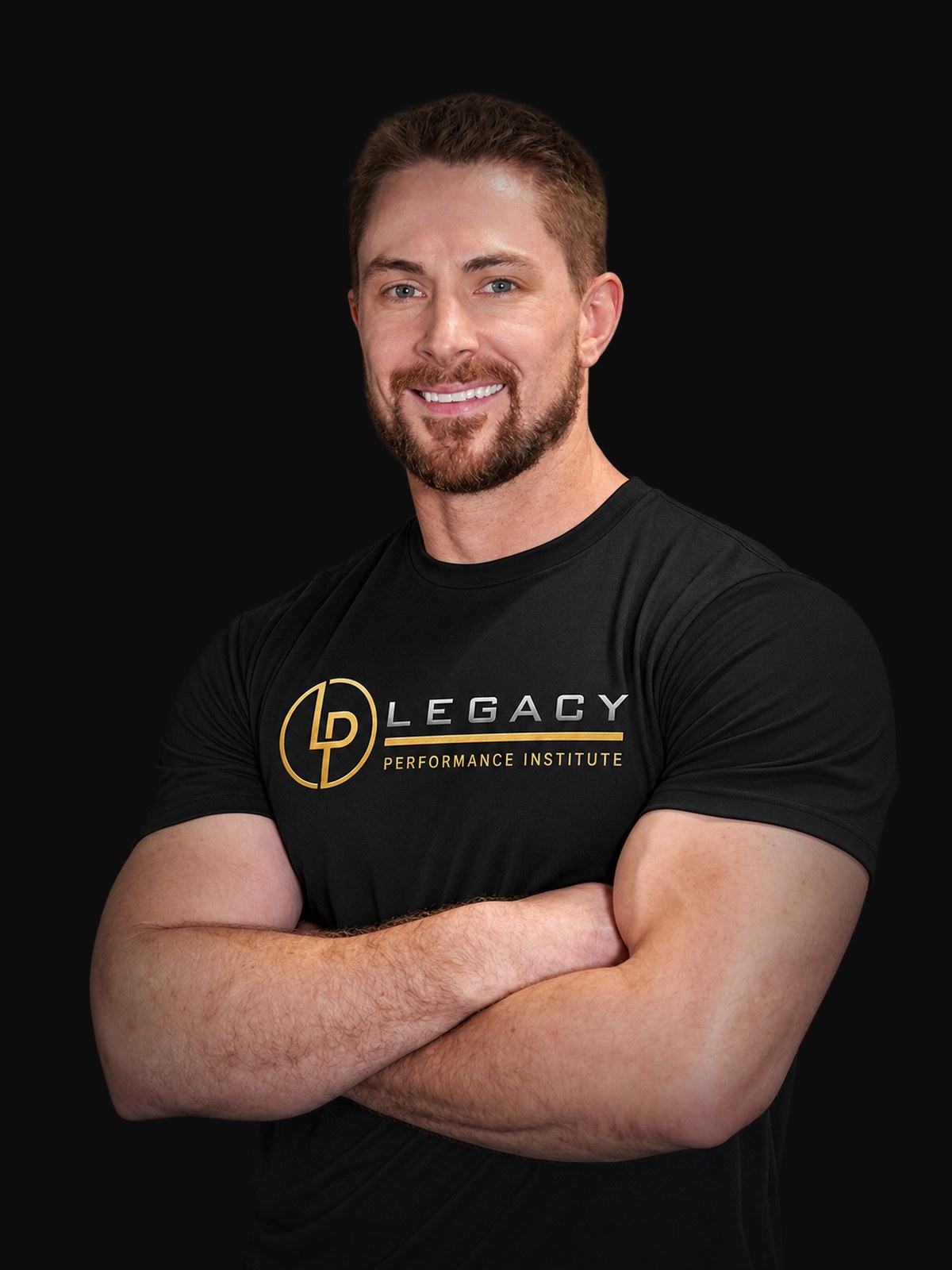
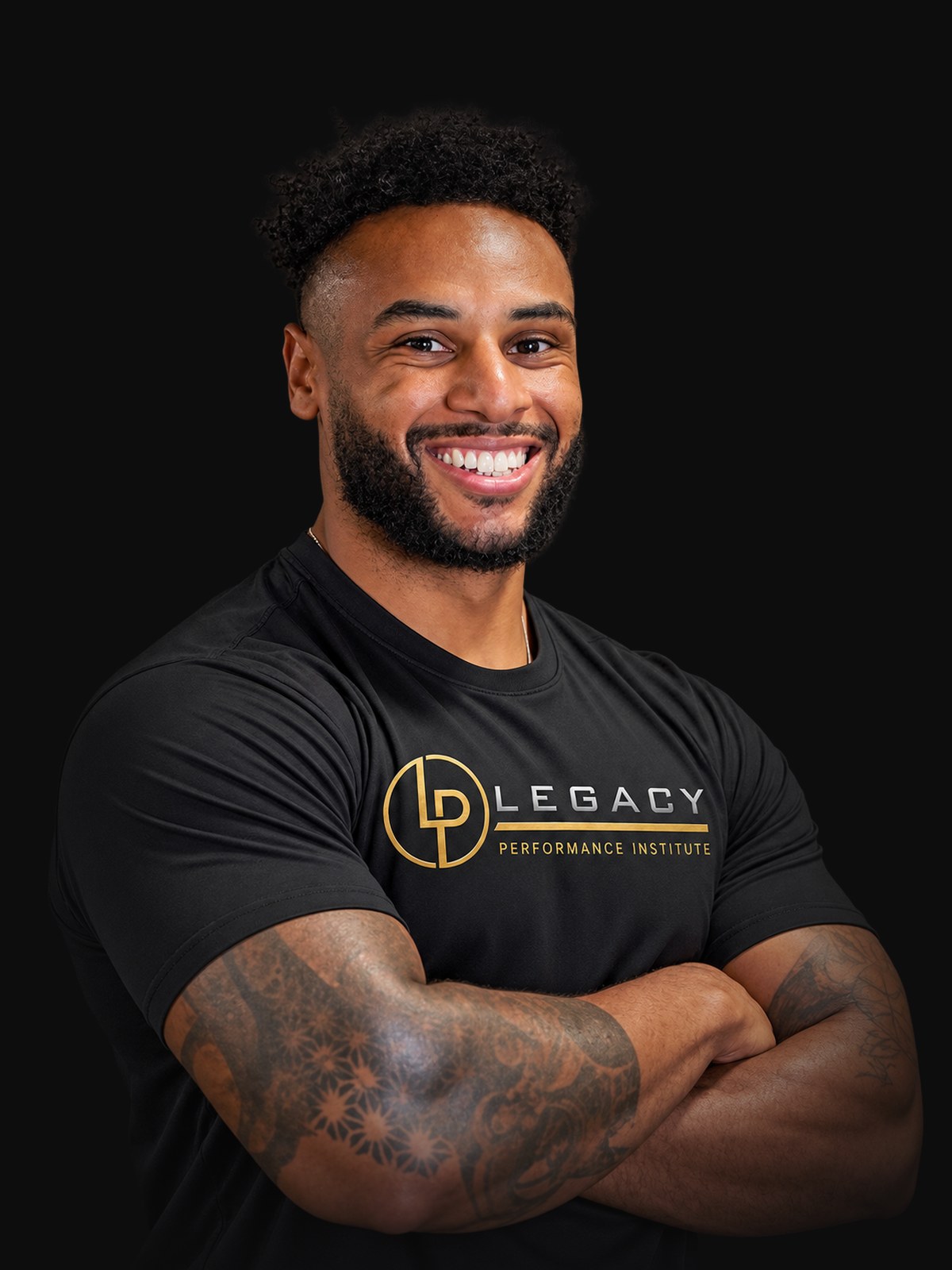
Kevin Lee, Landon Bergenthal, Mark Kern, Nima Naraghi, Randy Etheridge. Each one lists corrective exercise on their own Legacy profile. Open any profile to read their background and request a free introduction.
At Legacy Performance Institute Del Mar, 12264 El Camino Real, Suite 60, San Diego, CA 92130. Hours: 5:00 AM – 10:00 PM, seven days · 24/7 for VIP Access members.
Coaching is priced by each coach, typically per session or as a package, and quoted after your free introduction. No membership is required to train with a coach. Coaching is booked directly with the coach you choose.
No. Your coach starts with an assessment and builds the program to your level. Your first consultation and introductory session with a Legacy coach is free, with no obligation.
No. Corrective exercise is coached training. If you are recovering from an injury or surgery, follow your physician or physical therapist first, and ask your coach to work alongside their guidance.
This is general fitness information, not medical advice. Check with your physician before starting a new exercise or nutrition program, especially if you have a medical condition, an injury, or are pregnant.
Your first consultation and introductory session with a Legacy coach is free, with no obligation. Tell us about your goals and we will match you with the right coach.